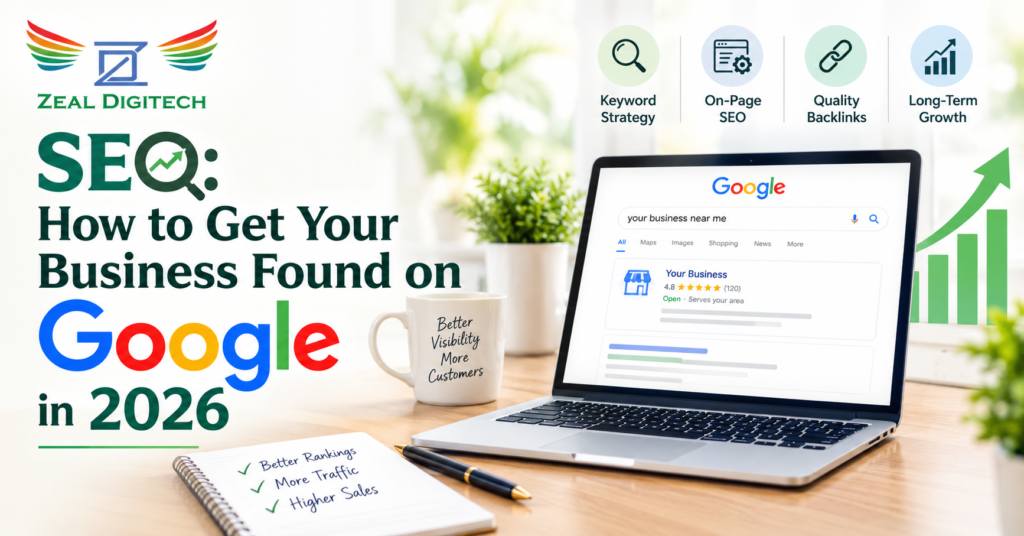
SEO: How to Get Your Business Found on Google in 2026
October 9, 2026
In today’s digital world, having a professional website is essential for businesses that want to build credibility, reach potential customers, and grow online. A well-designed website helps customers understand your services, explore your brand, and connect with your business easily.
Website design and development involve more than creating attractive web pages. A successful website should offer smooth navigation, mobile responsiveness, fast loading speeds, and a user-friendly experience. It should also support your business goals and make it easy for visitors to take action.
At Zeal DigiTech, we understand the importance of building a strong digital presence. This guide explains the essential elements of website design and development, the latest website trends, and how businesses can create an effective online experience in 2026.
What Is Website Design and Development?
Website design focuses on the visual appearance and user experience of a website. It includes layouts, colours, typography, images, navigation, and the overall presentation of your brand.
Website development focuses on the technical side of building a website. It involves implementing website functionality, creating interactive elements, connecting databases where required, and ensuring that the website works correctly across different devices.
Together, website design and development create a professional online platform that helps businesses present their services, engage visitors, and generate enquiries.
Why Is a Professional Website Important for Your Business?
A website often serves as the first point of contact between a business and a potential customer. A clear, professional, and easy-to-use website can help visitors understand what your company offers and why they should consider your services.
1. Builds Brand Credibility
A professional website communicates your brand identity and provides important business information. Clear service descriptions, consistent branding, testimonials, and contact details can help establish trust with potential customers.
2. Improves Online Visibility
A search-engine-friendly website helps search engines discover and understand your content. Proper page structure, relevant information, descriptive titles, and technical optimisation can support your SEO strategy.
3. Reaches Customers Across Devices
Many people browse websites using smartphones and tablets. Responsive website design ensures that content, images, forms, and navigation adapt to different screen sizes.
4. Generates Business Enquiries
A website can encourage visitors to contact your team through enquiry forms, phone calls, email, or messaging applications. Clear calls to action help users understand what to do next.
5. Supports Digital Marketing
Your website provides a central destination for visitors arriving from Google search results, social media platforms, email campaigns, and online advertisements.
Essential Features of a Successful Business Website
When planning a new website or improving an existing one, focus on features that provide value to your visitors and support your business objectives.
Mobile-Responsive Design
Your website should function properly across mobile phones, tablets, laptops, and desktop computers. Responsive layouts help users navigate your content without unnecessary zooming or scrolling.
User-Friendly Navigation
Visitors should be able to find important information quickly. Organise your pages logically and use clear menu labels to make browsing easier.
Fast Loading Speed
Slow-loading pages can frustrate visitors and affect the overall user experience. Optimise images, minimise unnecessary scripts, and use suitable hosting and caching solutions.
Search Engine Optimisation
SEO helps search engines understand your website and its relevance to users’ queries. Important practices include descriptive page titles, useful content, internal linking, image alt text, crawlable navigation, and appropriate technical configuration.
Clear Calls to Action
Use clear prompts such as “Contact Us,” “Request a Consultation,” or “Explore Our Services” to guide visitors towards relevant actions.
Website Security
HTTPS, secure authentication, regular software updates, backups, and appropriate security controls help protect your website and its users.
Different Types of Websites for Businesses
The right website structure depends on your business model, audience, and objectives.
Business websites: Present company information, services, contact details, and important business updates.
E-commerce websites: Allow businesses to display products, manage orders, accept payments, and sell online.
Corporate websites: Provide detailed information about an organisation, its services, team, expertise, and business activities.
Portfolio websites: Showcase projects, creative work, professional achievements, and case studies.
Landing pages: Focus on a particular campaign, product, service, or offer and encourage visitors to complete a specific action.
Custom web applications: Provide specialised functionality such as booking systems, dashboards, customer portals, and workflow management.
Choosing the appropriate website type helps ensure that its structure and functionality match your business requirements.
Website Design Trends to Follow in 2026
Website design continues to evolve as user expectations and digital technologies change. Businesses should focus on trends that improve usability rather than adopting visual effects simply because they are popular.
Clean and Minimal Layouts
Simple layouts, readable typography, and well-organised content help visitors focus on important information.
AI-Powered Website Experiences
AI-powered chat assistants and automated support tools can help answer common questions and guide visitors towards relevant services when implemented appropriately.
Accessibility-Focused Design
Readable text, sufficient colour contrast, keyboard navigation, and meaningful image descriptions help make websites more accessible to different users.
Interactive Elements
Subtle animations, interactive demonstrations, and useful visual elements can make websites more engaging when they do not interfere with usability or performance.
Conversion-Focused Design
Businesses increasingly benefit from clear messaging, straightforward enquiry forms, relevant calls to action, and layouts designed around customer needs.
How Website Design and SEO Work Together
Website design and search engine optimisation should be planned together. A visually attractive website may struggle to attract relevant organic traffic if its content is unclear or search engines cannot properly access its pages.
To build a search-friendly website, businesses should:
- Organise content using meaningful headings.
- Create useful, original content for their target audience.
- Use descriptive URLs and relevant page titles.
- Link related pages to help visitors and search engines navigate the website.
- Optimise images and improve page performance.
- Ensure important pages can be crawled and indexed.
- Provide a smooth mobile experience.
- Monitor performance using tools such as Google Search Console and Google Analytics.
Good design and SEO work together to help visitors find information, understand your services, and navigate your website effectively. However, rankings depend on multiple factors and cannot be guaranteed through design changes alone.
Common Website Design Mistakes to Avoid
Businesses sometimes overlook important details when creating a website. Avoiding these mistakes can improve usability and help your website communicate more effectively.
Unclear messaging: Explain what your business does and who it serves as soon as visitors reach your website.
Poor mobile experience: Check that navigation, buttons, images, and forms work correctly on smaller screens.
Outdated information: Keep service descriptions, contact details, business information, and published content accurate.
Complicated navigation: Use a clear structure so visitors can find important pages without confusion.
Missing calls to action: Make it easy for visitors to enquire, request information, or explore your services.
Ignoring website maintenance: Keep software updated, monitor performance, and maintain appropriate backups and security measures.
Why Choose Zeal DigiTech for Website Solutions?
A professional website should reflect your brand, provide a positive user experience, and support your broader digital marketing strategy.
Zeal DigiTech provides digital solutions including website design and development, search engine optimisation, social media marketing, branding, and lead generation.
Our approach focuses on helping businesses strengthen their online presence through:
- Professional website design aligned with your brand identity
- Responsive layouts for different devices
- User-friendly navigation and clear service presentation
- Search-friendly website structures
- Enquiry-focused website experiences
- Digital marketing solutions that support business growth
Whether you are launching a new business website or improving an existing one, the right digital strategy can help create a more effective online experience.
Visit Zeal DigiTech to explore our digital marketing and website solutions.
Frequently Asked Questions
1. Why does every business need a website in 2026?
A website helps businesses establish an online presence, showcase their services, share useful information, and provide customers with convenient ways to get in touch.
2. What makes a website SEO-friendly?
An SEO-friendly website combines useful content, clear page structure, descriptive titles, relevant internal links, mobile responsiveness, good performance, and accessible technical settings.
3. How can I improve my website’s Google rankings?
Publish helpful content, address your audience’s search intent, improve technical SEO, build relevant internal links, and monitor indexing and search performance. Rankings depend on several factors, so results are not guaranteed.
4. Is mobile-responsive website design important?
Yes. Responsive design helps users access your website across different screen sizes and provides a more consistent browsing experience.
5. Can a website help generate quality leads?
Yes. A website can support lead generation through relevant service pages, clear calls to action, useful content, enquiry forms, and a smooth user experience. Lead quality also depends on your audience and follow-up process.
Conclusion
Website design and development play an important role in building a successful online presence. A professional website helps businesses communicate their brand identity, showcase their services, improve user experience, and support their digital marketing efforts.
By focusing on responsive design, useful content, SEO, website security, and clear calls to action, businesses can create websites that better serve their customers and long-term objectives.
Ready to strengthen your online presence? Connect with Zeal DigiTech to explore website design, development, and digital marketing solutions tailored to your business goals.